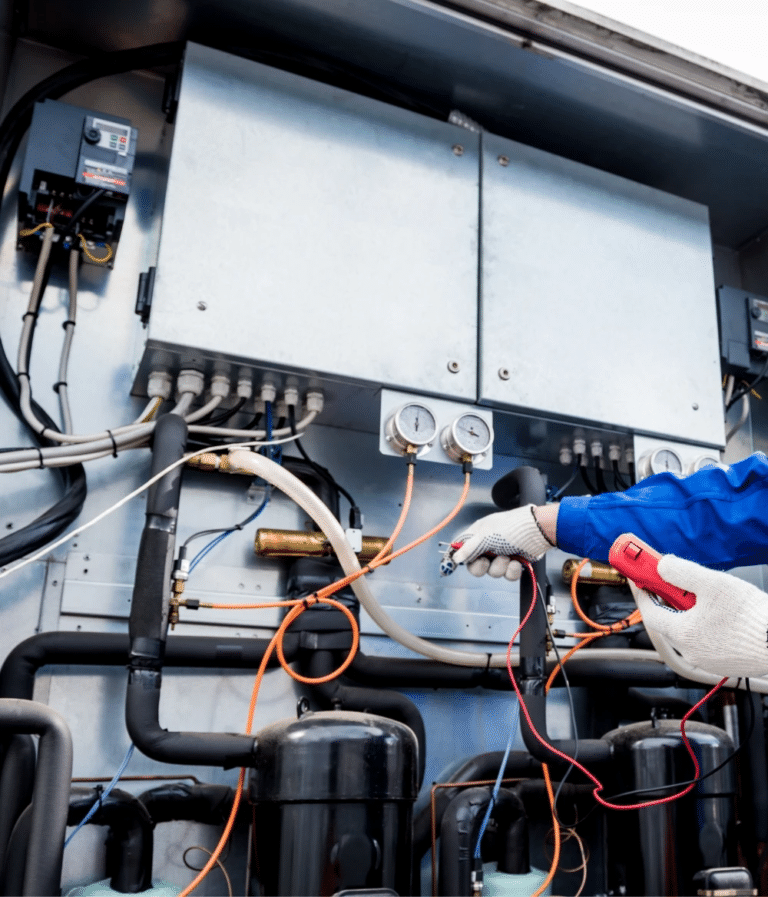
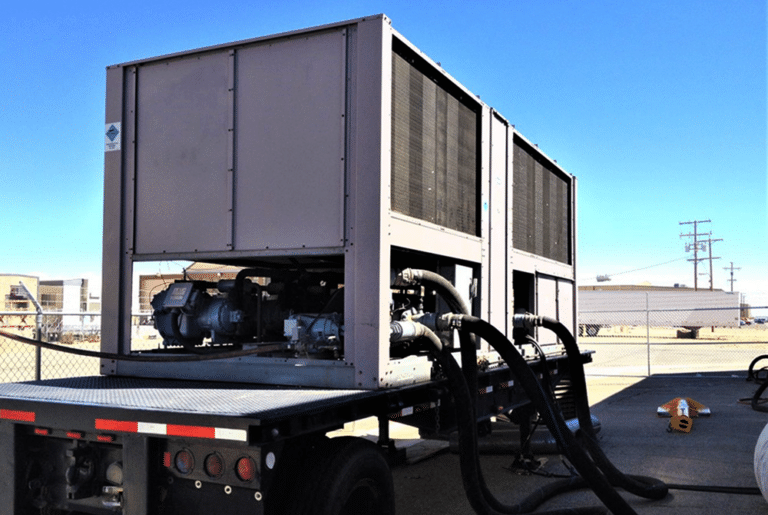
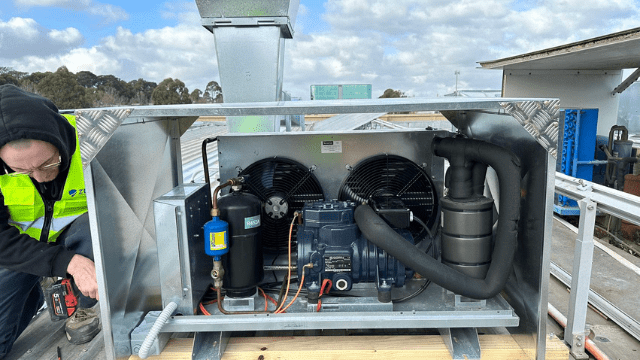
If your cool room has tripped out twice this month and your fridge mechanic is starting to feel like part of the staff, you’re facing a decision that costs money either way: keep patching the system, or start fresh? There’s no universal rule, but there is a clear framework experienced technicians use, judging the system as a whole rather than one breakdown at a time.
The Real Cost of Repeated Repairs
The thing about repeated repairs is that the invoice you pay the technician is only part of the damage. Every breakdown carries a hidden tally that rarely makes it onto a quote.
When a system goes down, you’re not just paying for parts and labour. You’re potentially losing stock, breaching food safety temperatures, turning customers away and pulling staff off their actual jobs to manage the mess. A single weekend failure in a busy bottle shop or a
supermarket cool room can wipe out thousands of dollars in spoiled product before anyone even arrives on site.
So when you weigh up repair against redesign, the comparison isn’t “one repair bill versus the cost of a new system.” It’s the total cost of keeping an unreliable system limping along, including downtime, lost stock and lost trade, versus the cost of a system built to run reliably for the next decade. Framed that way, the calculation often looks very different.
Factor 1: System Age and Component Reliability
Age is the first thing any good technician checks, because it quietly shapes everything else.
Typical lifespan (10–15 years) and degradation signs
Most commercial refrigeration systems are designed to give you somewhere between ten and fifteen years of dependable service, assuming they’ve been looked after properly. Beyond that window, you start seeing the classic signs of a system winding down: longer pull-down times, ice building up where it shouldn’t, compressors running far longer than they used to, and temperatures that drift even when nothing obvious has failed.
These aren’t random faults. They’re symptoms of a system whose components are all ageing together. Once one part gives out, its neighbours usually aren’t far behind, which is why repairs on older units tend to come in clusters rather than one at a time.
When repair stops making financial sense
A useful rule of thumb borrowed from the trade: if a single repair costs more than about half the price of replacing the unit, and the system is already past the ten-year mark, replacement is almost always the smarter call. You’re effectively pouring serious money into an asset that’s near the end of its working life and likely to fail again soon.
The flip side matters too. A four-year-old system with a single failed component is worth repairing every time. Age on its own doesn’t condemn a system, but it does change how much weight you give to every other factor on this list.
Compressor, seals, and control system issues
The major components of any refrigeration system, the compressor, the seals and gaskets, and the control electronics, are also the most expensive to replace. When faults start appearing across all three, you’re no longer dealing with a tired system; you’re dealing with one that’s structurally worn out. A compressor replacement alone can run into the thousands, and pairing that with degraded seals and an ageing control board often pushes the repair cost past the point of sense.
What complicates this further is the refrigerant inside the system. If your unit runs on R22, every one of those big-ticket repairs gets harder and dearer.
Factor 2: Refrigerant Compliance and R22 Phase-Out
Here’s where the decision stops being purely financial and starts being a regulatory one as well.
R22 phase-out timeline in Australia
R22 has been on a managed exit in Australia for years now. From 2016 to 2029, imports are limited to 2.5 ODP tonnes of HCFC annually, roughly 45 tonnes of R22, and from 1 January 2030 bulk R22 imports will be banned entirely. From that point, servicing of any remaining R22 systems will rely solely on reclaimed refrigerant.
What this means in practical terms is that the gas to recharge your system is getting scarcer and pricier each year. Existing R22 equipment isn’t banned and doesn’t have to be retrofitted, and a unit in good working order can keep running on R22. But “in good working order” is the operative phrase. The moment an R22 system starts leaking or needs frequent recharging, the falling supply and rising cost turn a manageable repair into an expensive recurring headache, and one that gets worse every year between now and 2030.
When you’re already calling out a technician several times a season, you’ve crossed an important line. The total cost of ownership, the running total of every repair, every recharge and every hour of downtime, has started outrunning the cost of a modern replacement. That’s the threshold worth watching.
Age’s impact on repair vs. redesign decision
This is where age and refrigerant collide. An older system is statistically more likely to be charged with R22, and an older system is also more likely to need exactly the kind of major component work that involves recovering and recharging that refrigerant. The two problems compound each other. A ten-year-old R22 unit needing a compressor isn’t really a repair candidate at all; it’s a redesign conversation waiting to happen.
Factor 3: Energy Efficiency and Operating Costs
Even a system that isn’t breaking down can be quietly costing you a fortune.
Cost of R22 repairs vs. R410A/R32 upgrade
Older refrigeration units, particularly those running R22, are markedly less efficient than current systems. Worn compressors draw more power, degraded insulation lets heat creep in, and dirty or ageing coils force the whole system to work harder for the same result. The electricity bill rarely gets blamed, but it should.
Modern systems built around refrigerants like R410A or R32 run more efficiently and, in many cases, deliver noticeably lower power consumption for the same cooling capacity. When you stack the ongoing cost of R22 repairs and recharges against the running-cost savings of a newer refrigerant and a properly sized system, the upgrade frequently pays for a meaningful chunk of itself over a few years. If your energy bills have been climbing for no obvious reason, your refrigeration is a sensible first place to look, and worth raising during your next
scheduled maintenance visit.
Factor 4: Operational Load and Business Growth
The final factor has nothing to do with what’s broken and everything to do with what’s changed.
When refrigerant upgrade signals time to redesign
Refrigeration systems are sized for the demands they were designed to meet. If you’ve expanded your menu, added storage, extended your trading hours or simply grown your volume since the system went in, you may be asking it to do far more than it was ever built for. A system running flat out to keep up will fail sooner, run hotter and cost more, regardless of how well it’s maintained.
This is the point where a refrigerant upgrade quietly turns into a redesign. There’s little sense spending money to recharge or repair a system that’s fundamentally too small for your operation. If you’re already weighing up new gas and major components, it’s the natural moment to ask whether the underlying
commercial refrigeration system design still fits the business you run today, rather than the one you ran when it was installed. Building a system around your current and projected load is almost always cheaper than repeatedly patching one that can’t cope.
Your Diagnostic Checklist
Pulling the framework together, here’s how to read your own situation. Lean towards repair when:
- The system is under about eight years old.
- It uses a current refrigerant such as R410A or R32.
- Breakdowns are rare and isolated to a single component.
- Energy costs have stayed reasonably stable.
- The system still comfortably handles your operational load.
Lean towards redesign or replacement when:
- The system is past ten to twelve years of service.
- It still runs on R22 and needs recharging or major component work.
- You’re calling out a technician several times a season.
- Power bills are climbing without an obvious cause.
- Your business has grown beyond what the original system was sized for.
Most real-world situations fall somewhere in between, and that’s exactly where an experienced eye earns its keep. A proper on-site assessment looks at all four factors together rather than reacting to the latest fault, and gives you a clear picture of the true cost of each path before you commit.
If your system has you stuck on this question, or you’re in the middle of a breakdown right now and need a fast answer, our team can help you weigh it up honestly.
Get in touch with Zeal Group for an on-site assessment, and if you’re facing an active failure, our
emergency refrigeration repair team can be on site fast to stabilise the situation first.