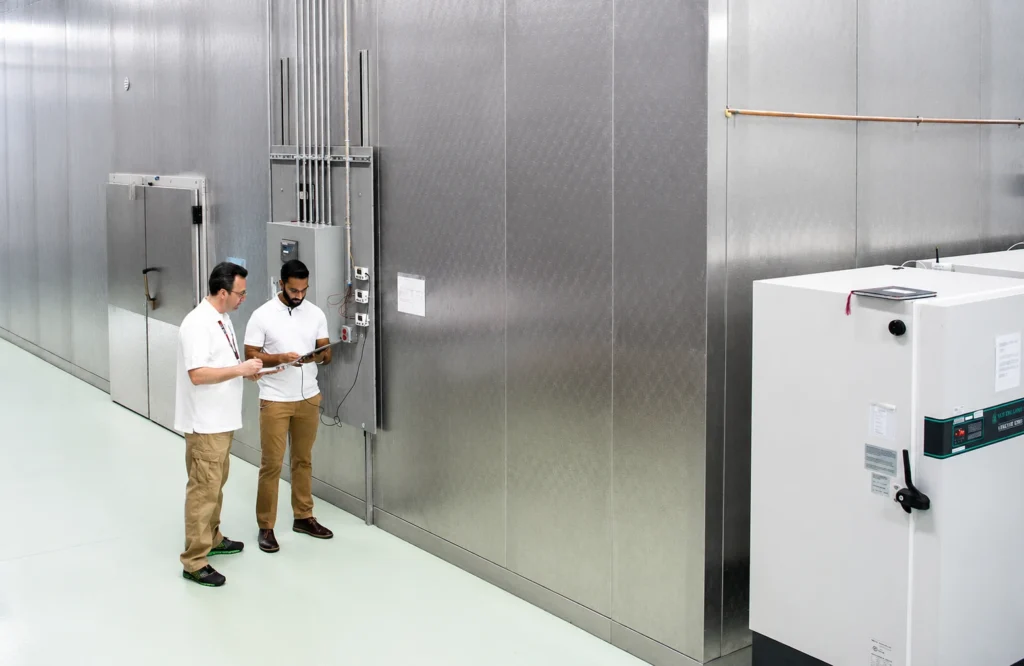
Most operators focus on the installation itself. By the time the technician is packing up and handing over the keys, the hard part feels done. But the handover is where many Melbourne cool room projects fall apart quietly — incomplete documentation, skipped checks, and unanswered questions that only become problems six months later when a compressor fails or a warranty claim gets disputed.
Knowing what a proper handover looks like puts you in control of that moment. This guide covers exactly what you should receive, what you should physically check, and what you should confirm with your installer before you sign anything.
The Importance of a Proper Cool Room Handover
A cool room handover is not a formality. It is the point at which responsibility shifts from the installer to you and that transition needs to be complete, documented, and verified.
If documentation is missing, you may find yourself without evidence of commissioning when a warranty claim arises. If physical checks are skipped, a fault present at installation could be attributed to your operation later. If questions go unasked, you may be running equipment at the wrong settings for your product type without realising it.
The handover is your single best opportunity to catch anything that is not right while the installer is still on site and accountable. That window closes the moment you sign off.
Essential Documentation to Receive at Handover
Before the job is considered complete, you should hold physical or digital copies of a specific set of documents. If any of these are missing, request them before signing. A professional
cool room installation contractor will have these ready as a matter of course.
Commissioning Certificates and Performance Test Results
A commissioning certificate confirms that the system has been tested under operating conditions and that it met the required performance parameters. This is not an optional document — it is evidence that the installation was completed to specification.
Alongside this, you should receive temperature test results showing the cool room reached and held its target temperature range. These results should reflect testing under realistic conditions, not just an empty room with the door sealed. Ask what load conditions were used during the test if this is not specified.
For any system using refrigerants, your installer should also be able to provide documentation that the work was carried out by an ARCtick-licensed technician. This is a regulatory requirement in Australia, not a courtesy.
Warranty Information and Operating Documentation
You need clear, written warranty terms covering two distinct components: the cool room structure itself and the refrigeration equipment within it. These are often covered by different parties under different terms, and they will not always be provided together.
Confirm who holds each warranty, what it covers, what voids it, and who to contact for a claim. Get this in writing. Verbal assurances at handover are worth nothing if the company changes hands or a technician leaves.
Operating documentation should include the manufacturer’s manuals for the refrigeration unit, temperature controller, and any monitoring equipment. Store these somewhere accessible. You or your staff will need them.
Maintenance Schedules and Service Recommendations
A commissioned cool room is not set-and-forget equipment. Ask your installer for a recommended maintenance schedule specific to your system, including how frequently the condenser coils should be cleaned, when refrigerant levels should be checked, and what visual checks your team can carry out between service visits.
This documentation is the foundation of any preventive maintenance approach. Operating without a schedule means faults develop undetected and equipment lifespan shortens — both of which carry direct commercial cost.
Final Inspection Checks Before Acceptance
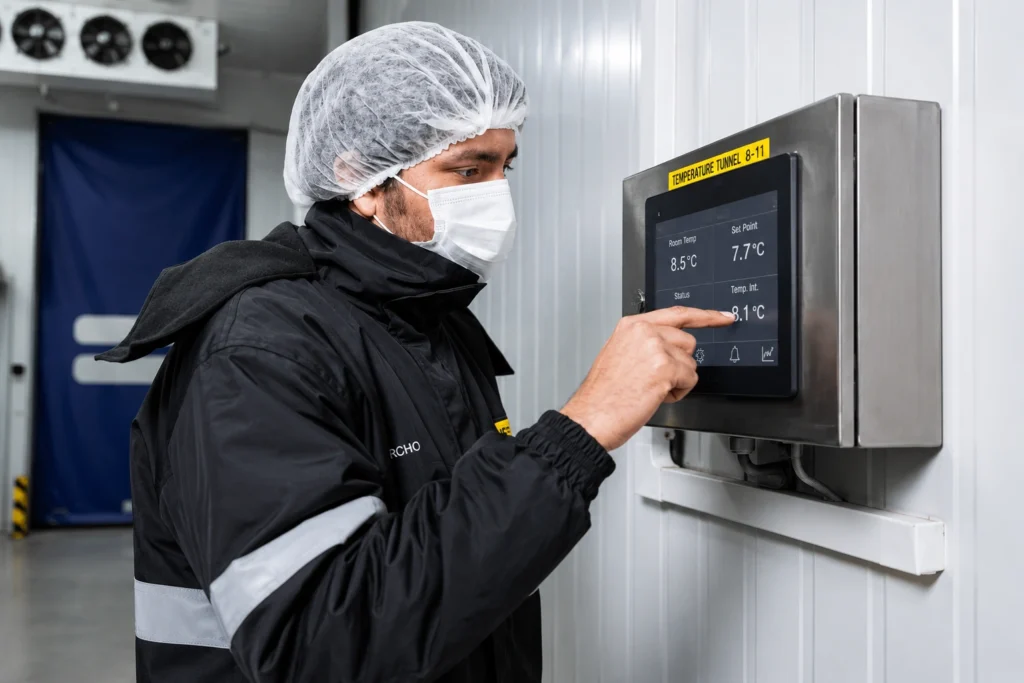
Walk through the following before signing off. You are not inspecting the technician’s work at a trade level; you are confirming the unit functions correctly and that visible aspects of the installation meet the agreed specification.
- Temperature stability: Ask the technician to demonstrate that the cool room is holding at the agreed target temperature. Confirm this on the controller display and, if you have a separate thermometer, verify independently.
- Door seals and closures: Check that all door seals make full contact around the perimeter. A seal that shows daylight or gaps will cause temperature loss and increase running costs. Confirm that self-closing mechanisms operate correctly and that doors do not require force to seal.
- Interior lighting and fittings: Confirm all interior lighting is working, that fittings are secure, and that there are no exposed fittings or sharp edges inconsistent with the specification.
- Drainage: If a floor drain is part of the installation, confirm it is clear and that water runs away from the unit rather than pooling inside the cool room.
- External unit clearance: Check that the condenser unit has adequate clearance on all sides and that it has not been positioned in a way that restricts airflow or creates an access problem for future servicing.
- Electrical and control panel: Confirm the isolator switch location, confirm you understand how to power the unit down safely, and confirm that any alarms or monitoring equipment are functioning.
Key Discussions to Have with Your Installer
Before the handover is complete, have direct conversations on the following.
- Product-specific temperature requirements: Confirm the set point for your product type and ask whether adjustments are needed for seasonal ambient temperature changes. What works in winter may need recalibrating in summer.
- Who to call first: Get a clear answer on who handles the first call if the unit underperforms or trips an alarm in the first 30 days. This may be the installer, the refrigeration equipment manufacturer, or a nominated service provider. Ambiguity here costs time during a breakdown.
- What voids the warranty: Ask directly what actions on your part would void the manufacturer’s warranty or the installer’s workmanship warranty. This includes product overloading, improper cleaning methods, and unauthorised service calls.
Addressing Issues Before Project Sign-Off
If anything does not match the agreed specification at handover, do not sign off until it is resolved or formally acknowledged in writing.
This includes temperature performance that falls short of the agreed range, missing documentation, fittings that do not match the agreed materials, or physical defects in the installation. Raising these post-handover significantly reduces your leverage, and in some cases, disputes about pre-existing conditions can affect warranty outcomes.
If a minor issue is agreed to be rectified within a defined timeframe, document it in writing with a clear deadline and confirm what happens if it is not completed. Do not accept verbal commitments.
If you are not satisfied with the response from your installer, or if you have concerns about the quality of the work, contacting a qualified
cool room service and repair provider for an independent assessment is a reasonable step before finalising sign-off.
A Complete Handover Supports Reliable Long-Term Operation
A thorough handover does not just protect you from immediate problems. It sets up the operational conditions that determine how reliably your cool room performs over its working life. Documentation provides the baseline for warranty claims and service records. Inspection checks catch installation faults while they are still the installer’s problem. Conversations with your technician give you the operational knowledge you need to run the equipment correctly.
Ongoing
maintenance and preventive services after handover are the next line of protection. But they work best when the handover itself was done right. If your cool room installation is coming up or you have questions about a recent handover, Zeal Group’s ARCtick-licensed team works with Melbourne businesses at every stage — from design through to commissioning and ongoing maintenance. Call us on 1300 104 210 or get in touch online.