When a cool room starts underperforming, most business operators face the same question: do you retrofit what is already there, or start fresh? Temperatures creeping up, energy bills climbing, a compressor that has been repaired one too many times — these are the signs that push the decision to the surface.
It is not a straightforward call. The wrong decision in either direction costs you money. Retrofit a structurally compromised room, and you will be back to square one within a few years. Replace a system that still had useful life and you have absorbed a significant capital cost that was not necessary.
This guide breaks down the real decision criteria for Melbourne operators: structural condition, refrigeration compatibility, operational fit, and five-year cost of ownership so you can make the call on retrofitting or replacing your cool room based on facts, not assumptions.
The Key Factors That Should Drive Your Decision
Before committing to either option, there are four areas worth assessing carefully. Each one can shift the outcome significantly, and overlooking any of them leads to an incomplete picture.
Structural Integrity of the Existing Cool Room
The panels are the foundation of everything else. Insulated cool room panels have a functional lifespan, but age alone does not tell you much. What matters is their current condition.
Moisture ingress is the critical issue. Once water penetrates the insulation core, thermal performance degrades permanently. You can replace the refrigeration unit, upgrade the evaporator, and fit new door seals, but if the panels are wet internally, the room will never hold temperature as designed. You will run the compressor harder, consume more energy, and still struggle to reach target temperatures consistently.
Key indicators of structural compromise include visible corrosion or delamination on panel surfaces, condensation appearing on the outside of wall panels, floor panels that flex or shift underfoot, and door frames that no longer sit flush against the seals. If the panel structure shows none of these problems (no moisture ingress, no delamination, joins still intact) retrofitting is a viable path. If the panels are compromised, replacement is almost always the more cost-effective outcome, because no refrigeration upgrade compensates for a room that is leaking heat through its walls.
Refrigeration System Compatibility and Efficiency
The next question is whether the existing refrigeration infrastructure can support a modern replacement unit. This comes down to two factors: refrigerant type and overall system condition.
Older cool rooms may be running refrigerants that are phased out or being phased down under Australian regulations, with R22 being the most common example. If that is the case, retrofitting with a direct replacement is not straightforward. Converting the system to a compatible refrigerant often requires component changes well beyond the gas itself, and installing a new unit designed for current refrigerants adds further complexity. Either way, the scope of work expands considerably, and that changes the cost equation.
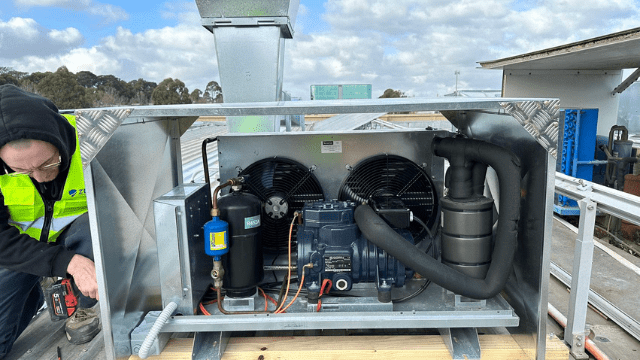
Efficiency is a separate consideration. A refrigeration unit that is more than 12 to 15 years old is likely less efficient than current equivalents. Compressor technology, variable speed fans, and modern controls have all improved meaningfully. If the room’s thermal envelope is intact but the refrigeration unit is ageing, a targeted component upgrade can deliver real energy savings and extend the room’s working life by several years without touching the structure.
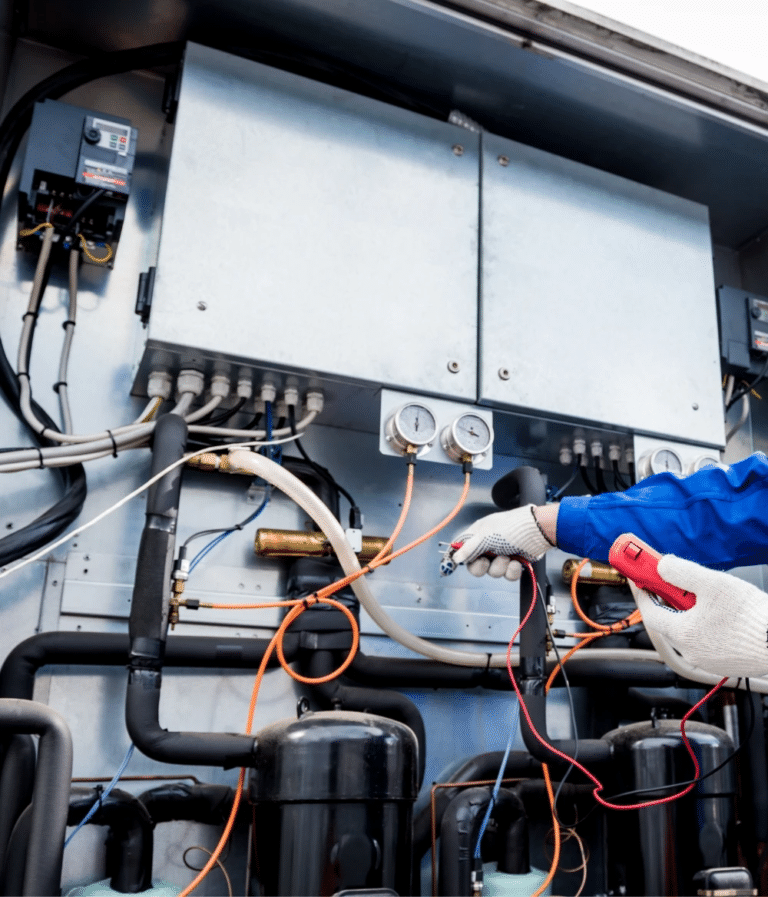
The viability of retrofitting the refrigeration system also depends on the condition of existing pipework, electrical supply capacity, and whether the evaporator and condenser are still correctly sized for how the room is being used. If the room’s operational demands have changed since it was first commissioned, the original system may never have been adequate for current use.
Whether the Existing Footprint Still Meets Operational Needs
A cool room that is technically functional can still be operationally obsolete. Before deciding whether to retrofit or replace, it is worth asking a separate question: does the existing footprint suit how the business operates today?
If the room is undersized for current stock volumes, poorly positioned relative to production or receiving areas, or configured in a way that creates workflow inefficiencies, investing to restore it leaves those problems intact. Retrofitting a room back to full performance does not change its dimensions, its position, or its layout.
A
custom cool room installation gives you the opportunity to reconfigure. You can adjust dimensions, reposition the entry point, change the door type, or incorporate a separate freezer zone if operations require it. Conversely, if the room’s size and position remain a good operational fit, that is a genuine point in favour of retrofitting. Demolishing and rebuilding takes more time, causes more disruption, and introduces variables that a targeted retrofit avoids.
Comparing the Five-Year Total Cost of Ownership
Single-point cost comparisons mislead. Looking at a retrofit quote against a replacement quote tells you the upfront cost difference, not the actual cost difference over the life of the decision.
A retrofit with a lower upfront cost but compromised panels, an undersized unit, or ageing electrical infrastructure will accumulate costs over time through higher energy consumption, more frequent service calls, component failures, and the possibility of a second partial retrofit within the same period. A room retrofitted inadequately often costs more over five years than a replacement would have.
A full replacement carries a higher capital cost but resets the maintenance clock. New panels, a correctly sized refrigeration system, current refrigerant, and modern controls typically mean lower service frequency, lower energy costs, and a longer gap before the next major intervention is needed.
When comparing options, ask for projections that include annual energy costs and expected service frequency, not just the installation price. A retrofit quote that does not account for ongoing running costs is not a complete comparison.
When Retrofitting Delivers Better Value
Retrofitting is the right call when the room’s structural foundation is sound and the scope of work is targeted rather than comprehensive.
It makes sense when the panels are intact with no moisture ingress or delamination confirmed. It makes sense when the refrigeration unit is the isolated failure point while everything else (panels, electrical supply, controls) is in good condition. It makes sense when the existing refrigerant is compatible with current Australian standards, keeping the conversion scope manageable. And it makes sense when the footprint continues to suit the operation well, making the disruption of a full rebuild difficult to justify.
In some situations, a well-executed retrofit also buys several additional years of reliable service at a cost that is feasible in the short term, with a planned replacement further down the track. That is a legitimate strategy, provided the retrofit is genuinely targeted and its limitations are understood upfront.
When a Complete Cool Room Replacement Is the Better Investment
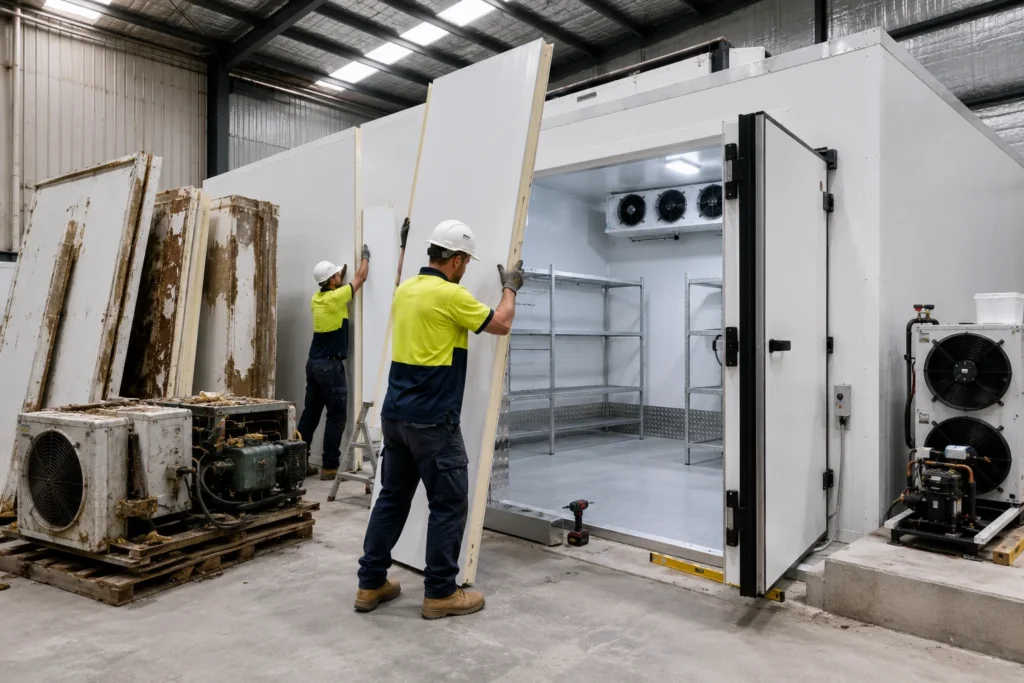
Replacement becomes the right decision when problems are structural, widespread, or compounding, in situations where retrofitting addresses symptoms rather than root causes.
If panel moisture ingress is confirmed, thermal performance is permanently compromised regardless of what refrigeration work is done above it. Replacing the refrigeration system without addressing the panels means running a higher load against a leaking thermal envelope indefinitely. The combined cost of a retrofit now and a panel replacement later typically exceeds the cost of a full replacement done once.
If the room is running a legacy refrigerant that is no longer viable under current regulations, full system conversion becomes impractical relative to the age of the equipment involved. In most cases this tips the economics toward replacement.
If multiple systems are failing at the same time (refrigeration unit, door seals, floor panels, electrical infrastructure) the retrofit scope has expanded to the point where you are effectively replacing the room piecemeal at a higher combined cost and without the efficiency and warranty benefits of a coordinated replacement.
If the room no longer fits how the business operates, restoring it to performance does not solve the underlying problem. And if five-year cost modelling shows retrofitting produces similar or higher total costs than replacement, the capital case for a new room is clear.
Making the Right Choice for Your Business
Neither option is inherently better. The answer depends on the specific condition of your room, your operational requirements, and your cost horizon.
The difficulty is that a visual inspection rarely tells the full story. A room can appear structurally sound from the outside while carrying significant moisture damage inside the panel cores. A refrigeration unit can seem functional while operating well outside its efficient range. Without a proper technical assessment, you are making a capital decision on incomplete information.
The practical step is to have the room assessed by a commercial refrigeration technician before committing to either path. A thorough
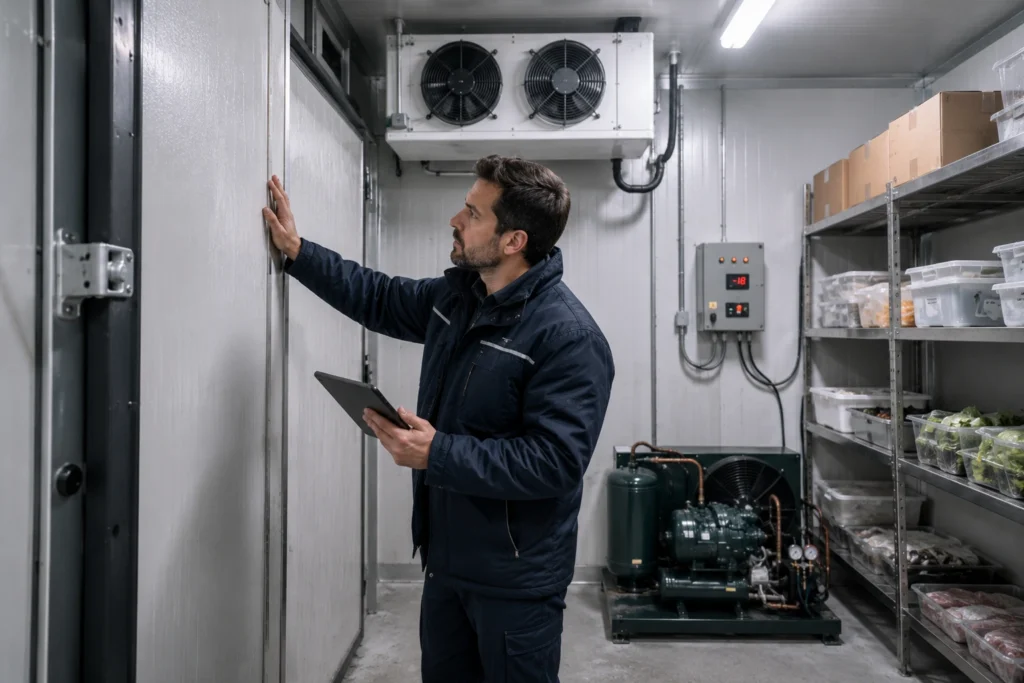
cool room service and repair assessment should cover panel condition including moisture testing, refrigerant type and system compatibility, current energy consumption relative to the room’s design load, and a realistic projection of remaining component life. That gives you the data to make a cost-based decision rather than an assumption-based one.
If you are weighing up options for an ageing cool room, our
commercial refrigeration system design service can inform the replacement or reconfiguration scope, ensuring any new installation is correctly sized and configured for your current operational demands.
Choosing the Option That Supports Long-Term Performance
Both retrofitting and replacement can deliver reliable long-term performance, but only when the scope of work matches the actual condition of the room and the real needs of the operation. A retrofit that does not address the root cause of failure, or a replacement that is undersized for current operational demands, will both underperform within a few years.
The businesses that get the best outcomes are those that base their decisions on a proper condition assessment and a genuine cost comparison across time, not on whichever quote comes in lower upfront. Getting that assessment done before committing is the step that separates a sound decision from an expensive one.
For a technical assessment of your cool room’s current condition, or to explore options for a replacement or upgrade, contact Zeal Group. Our ARCtick-licensed technicians service commercial refrigeration systems across metropolitan Melbourne, with strong coverage through the south-eastern suburbs including Springvale, Clayton, Dandenong, Mulgrave, and Keysborough.