A cool room that powers on and holds temperature is not necessarily a cool room that has been properly commissioned. For many Melbourne business operators, that distinction is invisible until something goes wrong.
Commissioning is the final verification stage of any cool room installation. It confirms that the refrigeration system is not just running, but running correctly, safely, and to specification. When this step is skipped, abbreviated, or handed off to a technician who isn’t qualified to perform it, the consequences typically don’t appear immediately. They accumulate in energy bills, product losses, compliance breaches, and eventually a repair call that costs far more than the commissioning would have.
Why Commissioning Matters After a Cool Room Installation
Installation and commissioning are two different phases of the same project. Installation covers the physical build: panels, refrigeration unit, electrical connections, drainage, and initial startup. Commissioning is what follows — the structured process of verifying that every component is performing correctly as part of a complete, integrated system.
The distinction matters because a cool room can appear functional while still operating outside safe parameters. Temperatures may be close enough on the day but inconsistent across zones. Airflow may be restricted in ways that create warm pockets near door seals or in corners. Refrigerant charge may be slightly off, placing the compressor under load that becomes a problem over time.
Operators evaluating quotes should pay attention to whether commissioning is itemised separately or bundled into a single line. A quote that seems unusually low for the scope of work often reflects a commissioning process that has been compressed, delegated, or removed entirely. That saving at the procurement stage tends to surface as a cost somewhere else. For context on what a properly scoped project looks like, see our
cool room installation service page.
What Proper Cool Room Commissioning Should Include
Commissioning is not a single check — it is a structured sequence of technical verifications that covers the refrigeration system, the physical environment, and the controls that govern them. A thorough commissioning process includes the following.
Pressure Testing and Refrigeration System Checks
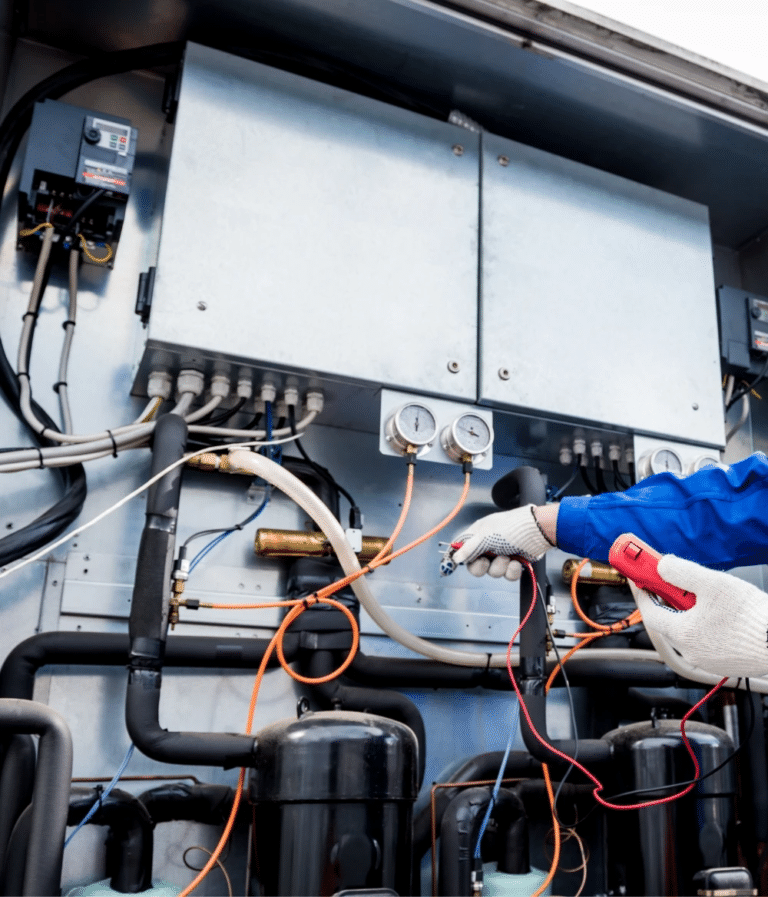
Before a cool room is loaded with product, the refrigeration circuit should be pressure tested to confirm integrity. This involves checking for leaks at all joints and connections, verifying that the refrigerant charge is within specification, and confirming that the compressor, condenser, and evaporator are operating within their designed parameters.
Refrigerant undercharge is a common consequence of rushed commissioning. It reduces cooling capacity, forces the compressor to work harder, and shortens system life — none of which is detectable from a basic temperature readout. An undercharged system may still pull the room down to the right temperature, but it will do so inefficiently and at a cost to the equipment’s longevity.
Temperature Calibration Across the Entire Cool Room
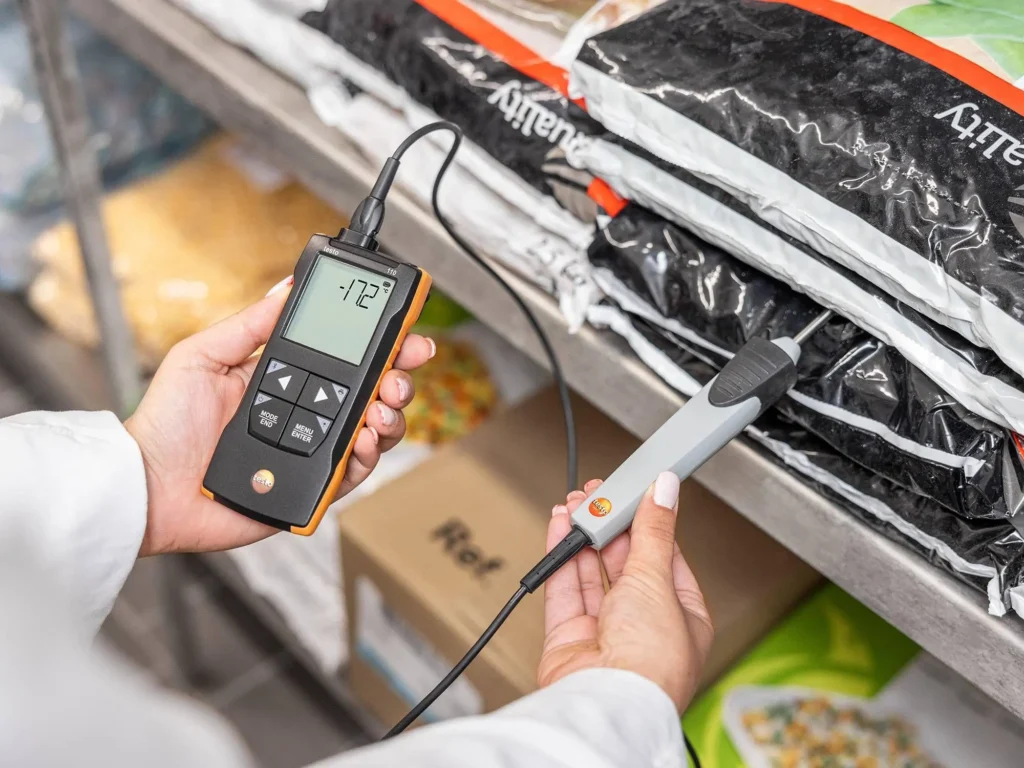
Thermostat accuracy is one thing. Actual temperature distribution across the room is another. Proper commissioning involves mapping temperatures at multiple points — including at different heights, near door seals, at loading zones, and in areas furthest from the evaporator — to confirm that the entire space is holding consistently within the required range.
For food businesses, this is a food safety requirement, not a preference. Regulatory compliance depends on demonstrating that the stored product is maintained at the correct temperature throughout the room, not just at the sensor location. A cool room that reads correctly at the controller but runs warm in one corner is a compliance liability.
Airflow Verification and Safety Device Testing
Refrigeration performance depends heavily on airflow. Restricted or poorly directed airflow creates temperature stratification, reduces system efficiency, and can cause product spoilage even when the thermostat appears normal.
Commissioning should include verifying that the evaporator fan is directing airflow correctly, that there are no obstructions affecting circulation, and that door seals are functioning as intended. At the same time, safety devices — including high-pressure cutouts, low-pressure switches, and defrost controls — should be tested under operating conditions to confirm they are active and set correctly. These devices exist to protect the refrigeration system and, in some cases, the product and staff. Leaving them untested is a meaningful risk.
System Documentation and Performance Validation
A completed commissioning process should produce documentation. This typically includes the refrigerant charge recorded, the temperature readings taken at each measurement point, the system pressures logged, and confirmation that all safety devices were tested and operational.
This documentation serves multiple purposes. It establishes a performance baseline that makes future service calls faster and more accurate. It provides evidence of compliant installation for food safety audits. And it forms part of the warranty record for both the refrigeration equipment and the installation itself. A cool room handed over without commissioning documentation leaves the operator with no verified starting point and no formal record of what was — or was not — checked.
The Risks of Skipping or Rushing Commissioning
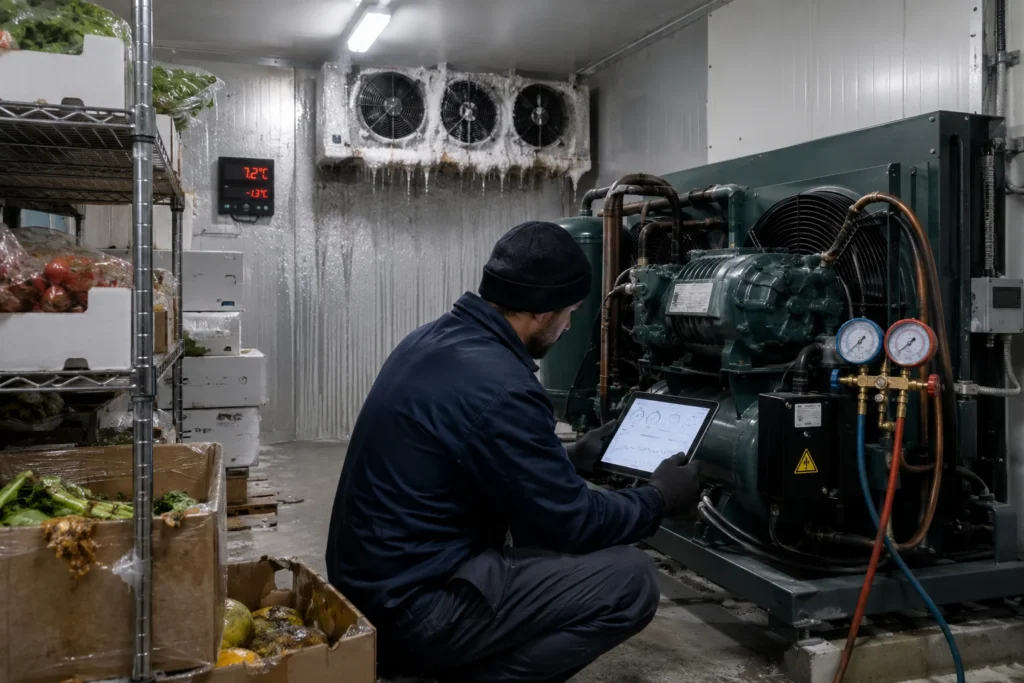
The problems that follow inadequate commissioning tend to follow a predictable pattern. In the short term, operators may notice that the room takes longer than expected to reach temperature after loading, or that it runs continuously without cycling off. Energy consumption is higher than it should be, but without a baseline to compare against, this is difficult to identify.
Over the medium term, the effects become harder to ignore. Product spoilage increases, particularly for temperature-sensitive items stored in zones that weren’t mapped during commissioning. Compressor wear accelerates due to incorrect refrigerant charge or operating pressures that were never verified. Door gaskets and seals fail faster than expected because airflow issues were not identified at installation.
The longer-term risk is a premature system failure — a compressor burnout, refrigerant leak, or control fault that requires a full repair or partial system replacement. When that happens, the absence of commissioning documentation compounds the difficulty of diagnosis. A
cool room service and repair technician assessing a system with no performance baseline cannot easily distinguish between a component that has failed and one that was never set up correctly in the first place.
Signs Your Cool Room May Not Have Been Properly Commissioned
If you are operating a cool room that was installed recently, or one that came with a building or fitout, the following indicators suggest commissioning may have been incomplete.
- No commissioning documentation exists: If you cannot locate a commissioning report that includes system pressures, refrigerant charge, and temperature readings across the room, the process either wasn’t completed or wasn’t recorded properly.
- Temperature inconsistency across the room: Product spoiling faster in certain areas, condensation forming on walls or products in specific zones, or visible ice buildup on the evaporator outside the normal defrost cycle are all signs of temperature distribution problems.
- The system runs continuously or cycles unusually: A cool room that rarely shuts off under normal load, or one that cycles on and off in rapid short bursts, is likely operating outside its designed parameters.
- High energy consumption without explanation: If your electricity costs increased noticeably after the installation without a corresponding increase in load, the system may be working harder than it should to maintain temperature.
- Frequent minor faults since installation: Recurring alarms, temperature excursions, or small refrigeration faults in a relatively new system are often symptoms of a commissioning gap rather than a component failure.
If any of these apply, a professional diagnostic assessment is the right next step before conditions deteriorate further.
Proper Commissioning Protects Your Investment
A cool room represents a significant capital investment. The refrigeration equipment, the installation, and the ongoing operating cost all depend on the system being set up correctly from the start.
Commissioning is where that setup is verified. It is the only stage of the installation process where the system is tested under real operating conditions with the refrigeration circuit under load, the controls active, and the temperature environment stabilised. Skipping it removes the only structured opportunity to identify and correct problems before they affect product, compliance, or equipment life.
At Zeal Group, every system is pressure-tested, temperature-mapped, and documented before handover. If you’ve taken on a cool room without a commissioning record, or if you’re seeing signs the system wasn’t set up correctly, contact our team for a diagnostic assessment. For businesses that want ongoing protection, our
maintenance and preventive services provide scheduled servicing with documented performance tracking — so you always have a verified baseline for your system’s health.