Cool Rooms
What Causes Ice Build-Up Inside a Cool Room, and Why It’s Not Always the Defrost System
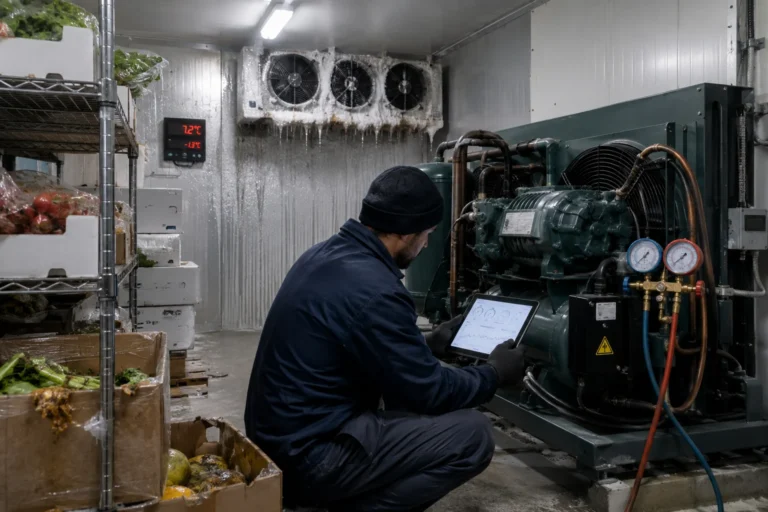
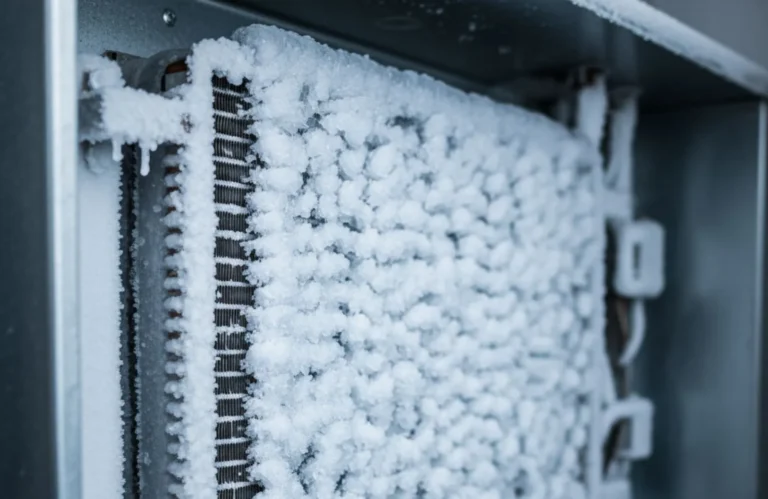
When ice starts forming inside a cool room, the defrost system is usually first in line for the blame. It is a fair assumption,…
If you run a supermarket, bottle shop, or hospitality venue, you’re managing two very different categories of refrigeration, even if they sit metres apart. Backroom cool rooms and freezers do one job: hold stock at temperature, out of sight, with minimal interference. Display fridges do something else entirely. They’re on the shop floor, under lights, opened constantly by customers, and expected to look as good as they perform.
That difference in job isn’t cosmetic. It changes how display units fail, when they fail, and what a technician needs to check first when something goes wrong.
A backroom fridge or freezer operates in a controlled, low-interference environment. Doors open a handful of times a day, ambient temperature is stable, and nobody’s judging it on appearance. Faults tend to build slowly and predictably: a failing seal, a dirty condenser, a slow refrigerant leak.
Display fridges don’t get that luxury. They’re built to sell product, not just store it, which means they’re judged on presentation as much as performance. A backroom unit can run a few degrees off target for a day without anyone noticing. A display fridge showing any visible sign of trouble is a problem the moment a customer sees it, and often a compliance issue before that.
Same core equipment, same refrigeration principles, genuinely different failure environment. Treating a display fridge fault like a backroom fault means missing the conditions that actually caused it.
Display fridges typically run under continuous internal or overhead lighting to keep product visible, and that lighting generates heat inside and around the cabinet. Add in shop floor ambient temperature (which climbs with foot traffic, other equipment, and general store heating), and the unit is working against a heat load a backroom fridge never sees. Compressors and evaporators sized correctly for a quiet backroom can be under constant strain in a retail-facing position.
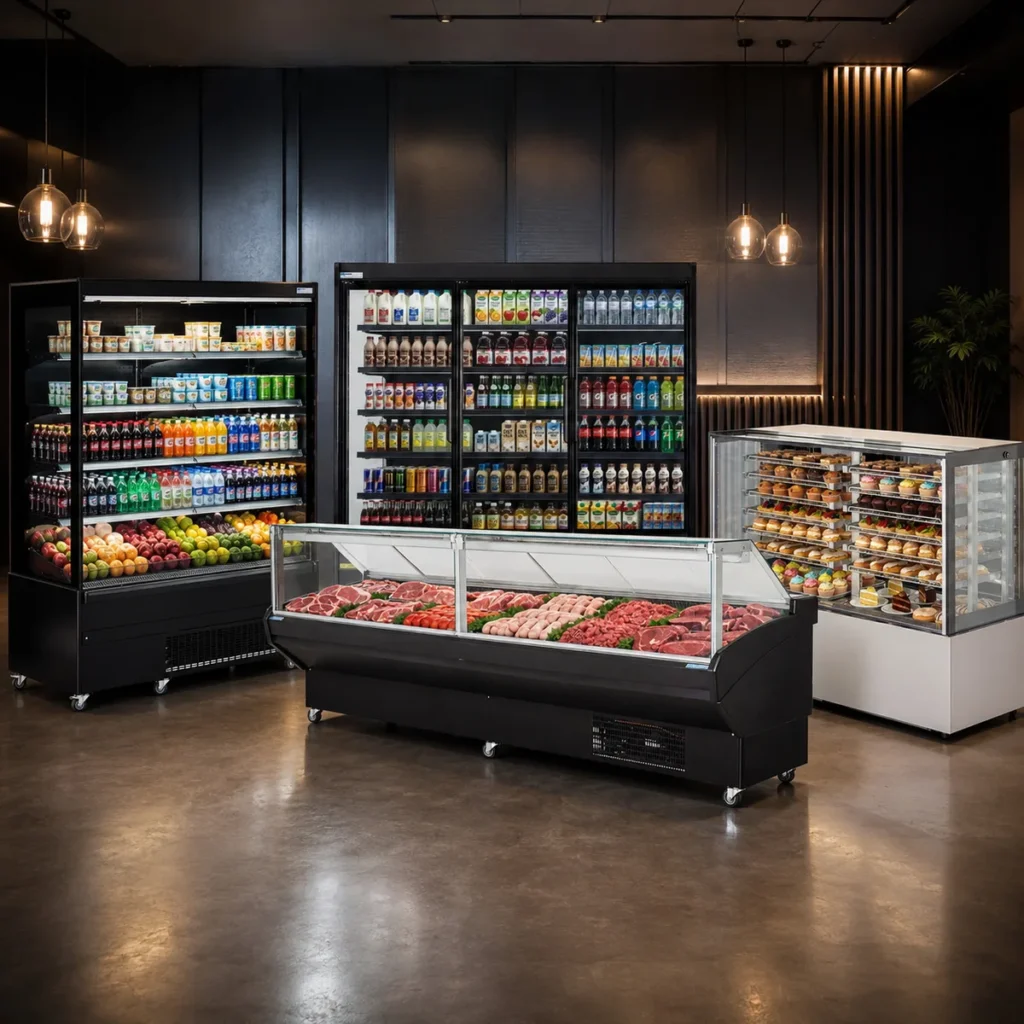
Every door opening lets warm, humid air into the cabinet. In a backroom setting, that happens occasionally, under staff control. On the shop floor, customers open display fridges dozens or hundreds of times a day, often leaving doors ajar while deciding what to buy. That repeated air exchange is one of the biggest drivers of temperature instability in display units, and it’s a condition the fridge has to be designed and maintained to cope with, not something that can be fixed by adjusting the thermostat.
A backroom freezer can have a bit of frost buildup or a slightly grubby door seal and nobody cares. A display fridge is part of the customer experience, and fogged glass, warped seals, or visible moisture undermine how the product looks, which affects sales regardless of whether the internal temperature is technically within range. Servicing has to weigh presentation alongside performance data.
Fogging happens when warm, humid shop-floor air meets the cold glass surface, and it’s aggravated by frequent door openings and inadequate anti-condensation heating in the door frame. It’s usually a sign that door seals, frame heaters, or door-opening frequency need attention, though a refrigerant issue can’t be ruled out without a proper diagnostic. For a full breakdown of what’s usually behind it, see Glass Door Fogging on a Display Fridge.
Backroom units generally hold a consistent temperature throughout because airflow isn’t constantly disrupted. Display fridges, with their glass fronts, open shelving, and frequent door use, are far more prone to temperature gradients, colder near the evaporator, warmer near the door or top shelves. This unevenness can put some stock outside safe holding temperature while a single sensor reading still looks fine, which is a food safety and compliance risk that a backroom-style single-point check won’t catch.
External condensation (on the cabinet body, base, or surrounding shelving) is usually a sign of humidity and temperature differentials in the retail floor environment itself. It’s more common in display units because they’re constantly exposed to ambient air exchange that backroom equipment is largely shielded from. Left unaddressed, it can lead to corrosion, slip hazards, and damage to surrounding fixtures.
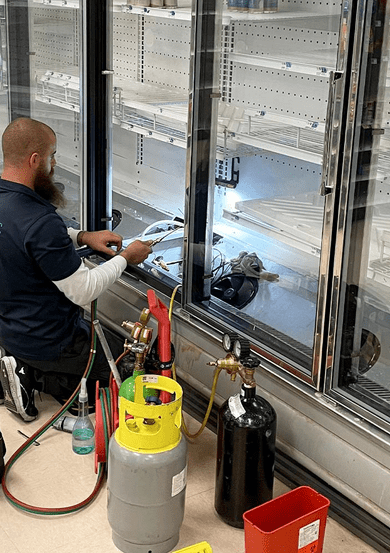
Because the failure drivers are environmental as much as mechanical, servicing a display fridge means checking the retail-floor conditions covered above before assuming a component has failed. A technician running a standard backroom diagnostic checklist on a display unit can fix the wrong thing: replacing a component when the real issue is how the environment is interacting with the equipment.
In summary, the three failure patterns specific to display environments are:
This is why Display Fridge Service & Repair stands as its own service, built specifically around retail-floor conditions. The diagnostic starting point is different, and so is what “normal operation” looks like for a unit that’s opened constantly and lit continuously.
That distinction matters even when the underlying fault turns out to be mechanical rather than environmental. A technician still needs to rule out standard component failure (compressor, thermostat, refrigerant charge), which is where Commercial Fridge Service & Repair principles still apply. The equipment itself is the same; it’s the diagnostic starting point that changes.
Most display fridge problems don’t start as breakdowns: they start small, easy to notice on the shop floor but easy to write off as one-off cosmetic issues rather than something worth reporting. Because these symptoms are gradual and don’t always trigger an alarm, they’re easy to deprioritise until stock is affected or a compliance check flags a problem.
Scheduled checks that specifically account for display-environment conditions (seal wear, heater function, airflow around the cabinet) catch these patterns early, before they turn into lost stock, customer-visible issues, or an emergency call-out. This is the kind of monitoring built into ongoing Maintenance & Preventive Services, rather than something a one-off repair visit is designed to pick up.
Getting this right the first time comes down to knowing which of these three environmental factors is actually at play, not just checking the compressor and hoping. If your display units are showing any signs of trouble on the shop floor, it’s worth having it assessed against display-specific conditions, not just a standard refrigeration checklist.
Zeal Group’s ARCtick-licensed technicians work on commercial display refrigeration across Melbourne’s south-east (from supermarkets in Dandenong to cafés and bottle shops in Springvale and Clayton), with the diagnostic experience to tell an environmental cause from a mechanical one. Get in touch with our team for a display fridge assessment or to set up a maintenance schedule that’s built around how your units are actually used on the shop floor.
Cool Rooms
When ice starts forming inside a cool room, the defrost system is usually first in line for the blame. It is a fair assumption,…
Cool Rooms
There is a common reason operators put off ringing a technician when their cool room starts playing up: the fear that a repair means…
Emergencies
If you manage a commercial kitchen, cold room, or display fridge fleet in Melbourne, you’ve probably faced this call at some point: a unit…
Our simple & effortless process ensures you will be provided with a free quote promptly, but also ensures you will have any questions answered along the way.