Cool Rooms
How Staff Behaviour Affects Cool Room Performance
A cool room is only ever half the picture. The system does exactly what it was built to do, yet how your team uses…
If the glass door on your display fridge keeps fogging up, it’s easy to treat it as a minor annoyance, something to wipe down and forget. In commercial refrigeration, though, display fridge fogging is almost always a symptom of one of four underlying faults, and identifying which one is the difference between a small adjustment and a unit heading toward failure.
A fogged-up glass door on a display fridge is one of the most common complaints operators raise, and it’s also one of the most consistently misread. The instinct is to grab a cloth and wipe it down, log it as a humidity issue, and move on. For businesses relying on display refrigeration to keep stock visible and saleable, ignoring what’s causing it can cost far more than a few minutes of visibility.
Fogging isn’t a cosmetic issue. It’s a symptom, and the underlying cause determines whether you’re looking at a minor adjustment or a unit heading toward failure. Continuing to clean the glass without identifying what’s driving the condensation means the fault stays active, quietly increasing energy use, straining components, or masking a bigger problem until it surfaces as a breakdown.
Glass door fogging on a commercial display unit typically traces back to one of four causes. Each has a different mechanism, and each calls for a different response from a technician. Fogging on its own isn’t usually an emergency, but it’s a reliable early indicator that something needs attention.
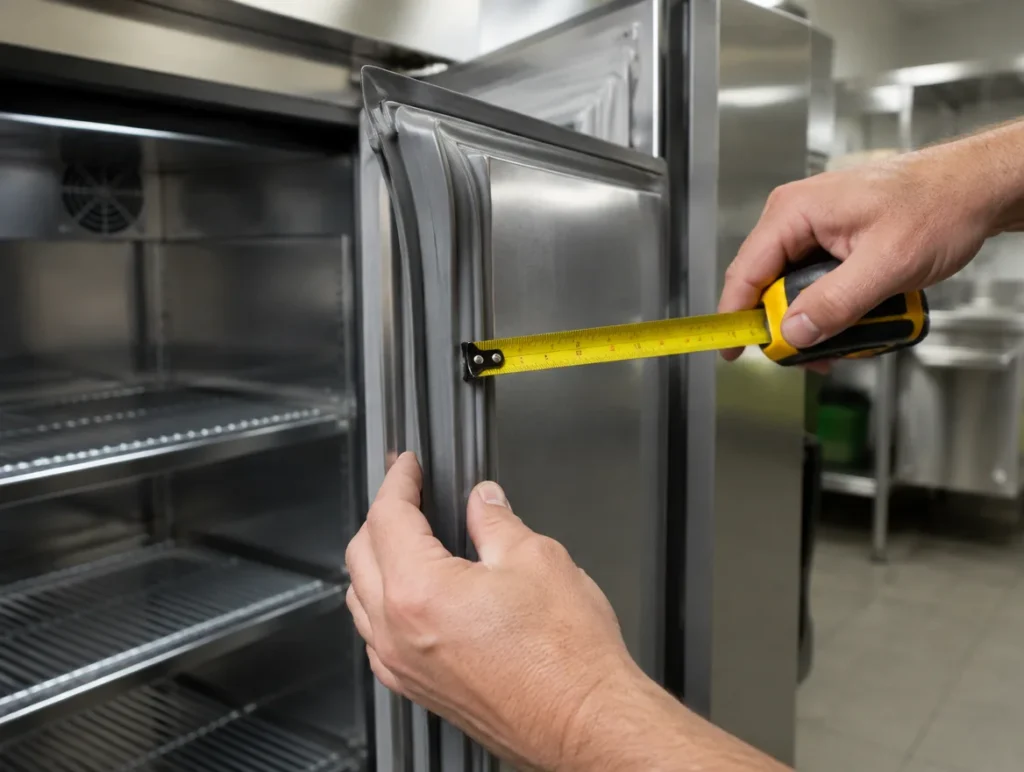
Most display fridges use a low-wattage anti-condensation heater built into the door frame or glass edge to keep the surface above dew point. When that heater fails (whether from a faulty element, a wiring fault, or a control board issue), the glass drops below the ambient dew point and condensation forms. This is one of the more common causes of persistent fogging, particularly in units that have been in service for several years, and it’s not something that resolves with cleaning or airflow adjustment.
A low refrigerant charge changes how a unit manages internal temperature and humidity load. As the system struggles to maintain set point, temperature differentials across the cabinet increase, and the glass can fog as a secondary effect of the unit working outside its designed range. This cause is easy to miss because the fogging can look identical to a heater fault from the outside, but the fix and the risk profile are entirely different: an undercharged system left unaddressed puts ongoing strain on the compressor.
Seals that have hardened, split, or lost their compression allow warm, humid external air to infiltrate the cabinet every time the door closes. That infiltration raises internal humidity and load, and fogging is often the first visible sign. Seal wear is progressive (it doesn’t fail all at once), which means fogging from this cause tends to start intermittently and get worse over weeks or months as the seal continues to degrade.
Where a unit’s location, ventilation, or original installation wasn’t matched to its operating environment, ambient humidity can outpace what the door heater and refrigeration system were designed to manage. This is less about a component fault and more about the unit being asked to perform in conditions it wasn’t set up for, a distinction that matters for how the issue gets resolved and whether it’s likely to recur.
Because these four causes look similar from the outside but require different diagnostics, glass door fogging isn’t something that should be assessed by trial and error on-site. A technician working through the fault will typically:
Each check either confirms or rules out a cause before moving to the next.
That process matters because the wrong assumption leads to the wrong fix, or no fix at all. A business that assumes a fogging door is a seal problem when the actual cause is a failing heater element will replace a seal, see no improvement, and be no closer to resolving the fault. Proper diagnosis avoids that cycle of guesswork and repeat callouts.
Treating fogging as a cleaning issue, or assuming it’s “just what these units do”, risks leaving an active fault running for weeks. In a display environment, that has two compounding costs: reduced product visibility, which affects sales, and a unit running outside its intended parameters, which affects energy use and component life. Neither cost is immediately obvious, which is exactly why the underlying cause needs a proper technical assessment rather than a guess.
Fogging rarely appears without warning. In most cases there are earlier signals that precede visible condensation on the glass:
Regular servicing is what catches these signals before they reach the point of a customer-facing fault.
This is the core value of scheduled Maintenance & Preventive Services: a technician checking heater circuits, refrigerant charge, and seal condition on a routine basis identifies wear before it becomes a visible problem. For businesses running display refrigeration as a core part of their operation, the cost of a maintenance visit is consistently lower than the cost of unplanned downtime, stock loss, or an emergency callout once a unit has already failed.
Where the cause is seal-related, addressing it early is straightforward through Fridge Seal Replacement & Repair. Replacing a degraded seal before it drives up humidity load and energy consumption is a small job compared to the compressor strain that results from leaving it in place.
If a display fridge is fogging, wiping the glass isn’t solving anything: it’s buying a small window of visibility while the underlying fault keeps running. Whether it’s a heater fault, a refrigerant issue, a failing seal, or an installation mismatch, the only way to know which one you’re dealing with is a proper technical assessment.
Zeal Group’s technicians work on commercial display refrigeration across Melbourne’s south-east, with the diagnostic experience to identify the actual cause rather than treating the symptom. Fogging on its own isn’t usually an emergency, but it’s a reliable early indicator that something in the system needs attention, and catching it early is what keeps a manageable fault from becoming an unplanned failure.
If your display fridge is fogging, get it looked at through our Display Fridge Service & Repair team.
Cool Rooms
A cool room is only ever half the picture. The system does exactly what it was built to do, yet how your team uses…
Cool Rooms
When ice starts forming inside a cool room, the defrost system is usually first in line for the blame. It is a fair assumption,…
Cool Rooms
There is a common reason operators put off ringing a technician when their cool room starts playing up: the fear that a repair means…
Our simple & effortless process ensures you will be provided with a free quote promptly, but also ensures you will have any questions answered along the way.