Commercial Fridges
Glass Door Fogging on a Display Fridge: What It Usually Means and When to Call
If the glass door on your display fridge keeps fogging up, it’s easy to treat it as a minor annoyance, something to wipe down…
A fixed, once-a-quarter maintenance visit treats every month the same. Melbourne’s weather doesn’t. A condenser that copes fine in a mild August can be pushed to its limit in a February heatwave. A defrost cycle tuned for cooler conditions can leave a cabinet quietly losing temperature control once the season turns. Businesses that plan refrigeration maintenance around the calendar, rather than around what the season actually does to the equipment, are more exposed to breakdowns at the worst possible time.
This matters more in Melbourne than in most Australian cities. Few places pack as much temperature swing into a single year, and that swing puts real strain on a walk-in cool room in a restaurant kitchen or a display fridge on a retail floor.
Melbourne’s reputation for “four seasons in one day” isn’t just a line for tourists. The city regularly swings from a cool morning to a 30°C-plus afternoon. Summer peaks have reached as high as 46.4°C, recorded in February 2009. Winters are comparatively mild, averaging around 7-14°C, but they bring more rain days and persistently damp conditions.
For a refrigeration system, that means the stress isn’t limited to a few extreme weeks each year. It’s a pattern of repeated, sometimes rapid swings. Different parts of a refrigeration system respond to those swings in different ways, which is why a single maintenance schedule run all year round tends to miss things a seasonally-aware one would catch.
A refrigeration system works by rejecting heat from inside the cabinet into the surrounding air through the condenser. The hotter that surrounding air gets, the smaller the temperature gap the condenser has to work with. The compressor has to run harder to compensate.
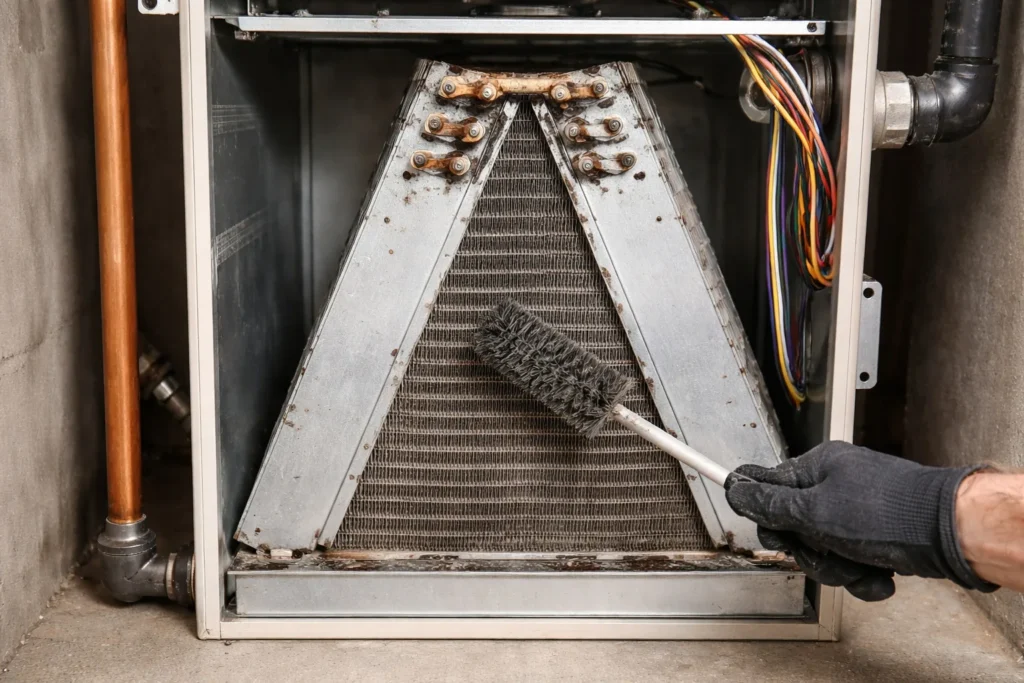
On a 40°C-plus Melbourne day, a condenser that was coping adequately in cooler months can push head pressure and discharge temperature well beyond its comfortable operating range. A compressor that would normally cycle on and off may end up running almost continuously. Over a run of hot days in a row, rather than just one hot afternoon, that additional load compounds, and components that were already working close to their limits have less opportunity to recover overnight.
A dirty condenser coil makes this worse. Dust and grease that have gradually built up without causing an obvious problem can become the difference between a system that copes with summer heat and one that trips out or fails outright.
This is why condenser cleaning and a refrigerant charge check carry more weight going into summer than at any other point in the year:
Catching a marginal fault here in spring, before the first heatwave, is a smaller and cheaper job than dealing with a full compressor failure in the middle of a 40°C week.
Winter doesn’t put the same load on a condenser, but it changes how the defrost cycle behaves. The defrost cycle exists to clear ice that naturally builds on the evaporator coil as moisture in the air condenses and freezes.
Melbourne’s winters are mild rather than genuinely cold, but they’re wetter and more humid. A defrost cycle that isn’t timed correctly for those conditions can leave a small amount of frost behind after each cycle. Left unaddressed, that frost accumulates. Airflow through the evaporator gets restricted, and the cabinet gradually loses its ability to hold temperature, often without anyone noticing until the stock inside is already affected.
A defrost control or heater fault is harder to spot than a summer breakdown because the symptoms build slowly rather than failing all at once. A pre-winter check of the defrost cycle, timer, and heater is the equivalent of the pre-summer condenser clean: a smaller job that heads off a much bigger one. It’s also worth checking drain lines at the same time, since a frozen or blocked drain during a defrost cycle is one of the more common causes of water pooling inside a cabinet over winter.
Door gaskets and seals wear out through exactly the kind of temperature and humidity swings Melbourne is known for. Condensation forms when humid air meets the cold surface of a sealed cabinet. The bigger the temperature differential at the door, the more condensation builds, which is one of the main things that degrades a seal over time.
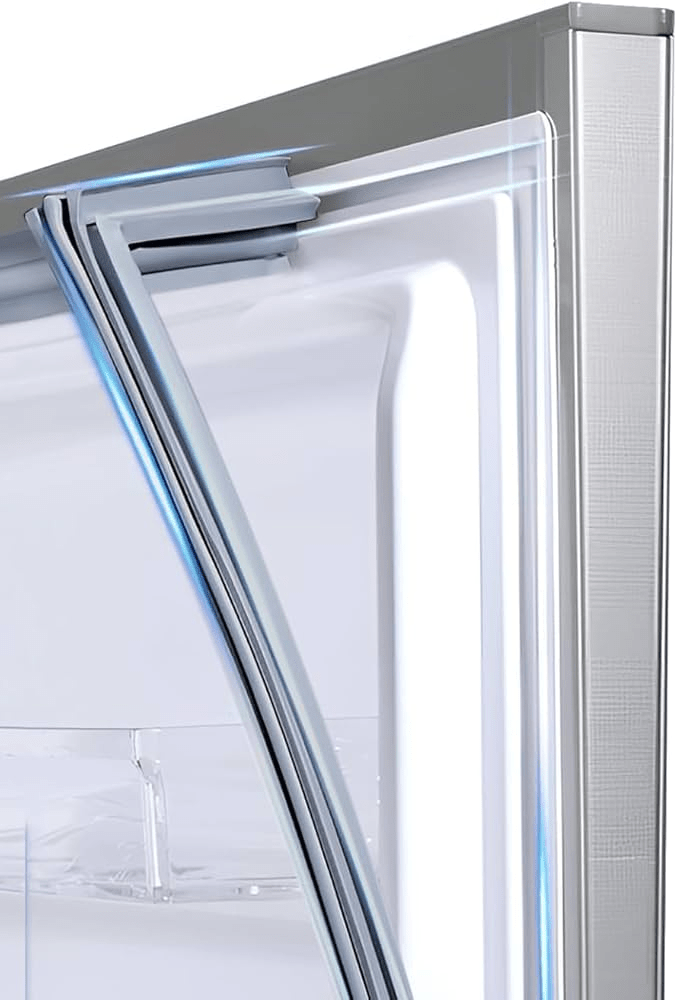
This isn’t purely a summer issue. Melbourne’s weather changes often within a single week, sometimes within a single day. Door seals here are subjected to more frequent condensation cycling than in a climate with one long, stable hot season and one long, stable cold one.
That’s worth factoring into how often seals get checked. A visual inspection for cracking, flat spots, or gaps isn’t just a summer or winter task. A seasonally-aware maintenance plan should specifically flag it at both the pre-summer and pre-winter checks, since that’s when the temperature differential at the door is changing the most. A seal that’s beginning to fail is easy to miss day to day, since the cabinet can still hold temperature for a while even with a partial gap, but it forces the compressor to work harder in the background to compensate, which shortens its working life.
None of this replaces a sound, usage-based maintenance schedule: quarterly for high-volume kitchens and supermarket displays, bi-annually for standard café and restaurant units, annually for lower-use or backup fridges. What it does is add two seasonal checkpoints on top of that baseline, roughly once in spring ahead of peak summer heat, and once in autumn ahead of the wetter winter months.
Businesses running a commercial fridge or cool room through a full Melbourne year are, in effect, asking one piece of equipment to perform well in two quite different operating environments, which is also why having a commercial fridge repair and cool room repair provider on call matters alongside routine maintenance. Building the seasonal checks into the maintenance calendar, rather than treating every visit the same, is the more reliable way to avoid a breakdown landing on the one week it’s least convenient.
A seasonal approach also tends to catch problems earlier than a purely reactive one. A condenser that’s running a little hotter than it should going into summer, or a defrost cycle that’s leaving a bit more frost than usual going into winter, is far cheaper to correct during a scheduled visit than after it’s caused a full breakdown. For a commercial kitchen or retailer, a breakdown rarely just means a repair bill: it can mean stock loss, a closed display case, or a health-compliance issue if temperature isn’t restored quickly.
It also makes costs more predictable. Two slightly more involved seasonal visits plus simpler check-ins the rest of the year are easier to budget for than an emergency callout that arrives without warning. Rather than treating every visit as an identical line item, a business can plan for two slightly more involved seasonal visits and simpler check-ins the rest of the year, which tends to even out costs rather than concentrating them around emergency callouts.
If your current maintenance plan runs on a single fixed interval regardless of the season, it’s worth asking whether it’s accounting for what summer and winter each do to your equipment. Zeal Group’s usage-based commercial refrigeration maintenance plans can be scheduled around these seasonal checkpoints alongside your regular servicing.
Commercial Fridges
If the glass door on your display fridge keeps fogging up, it’s easy to treat it as a minor annoyance, something to wipe down…
Commercial Fridges
If you run a supermarket, bottle shop, or hospitality venue, you’re managing two very different categories of refrigeration, even if they sit metres apart.…
Cool Rooms
A cool room is only ever half the picture. The system does exactly what it was built to do, yet how your team uses…
Our simple & effortless process ensures you will be provided with a free quote promptly, but also ensures you will have any questions answered along the way.